Monday
Sep092013
iOS blocking
 Monday, September 9, 2013 at 4:12PM
I just ran across this review of Pageclean, a service for blocking porn on iPhones and iPads that I thought was interesting.
Monday, September 9, 2013 at 4:12PM Monday, October 15, 2012 at 8:52PM 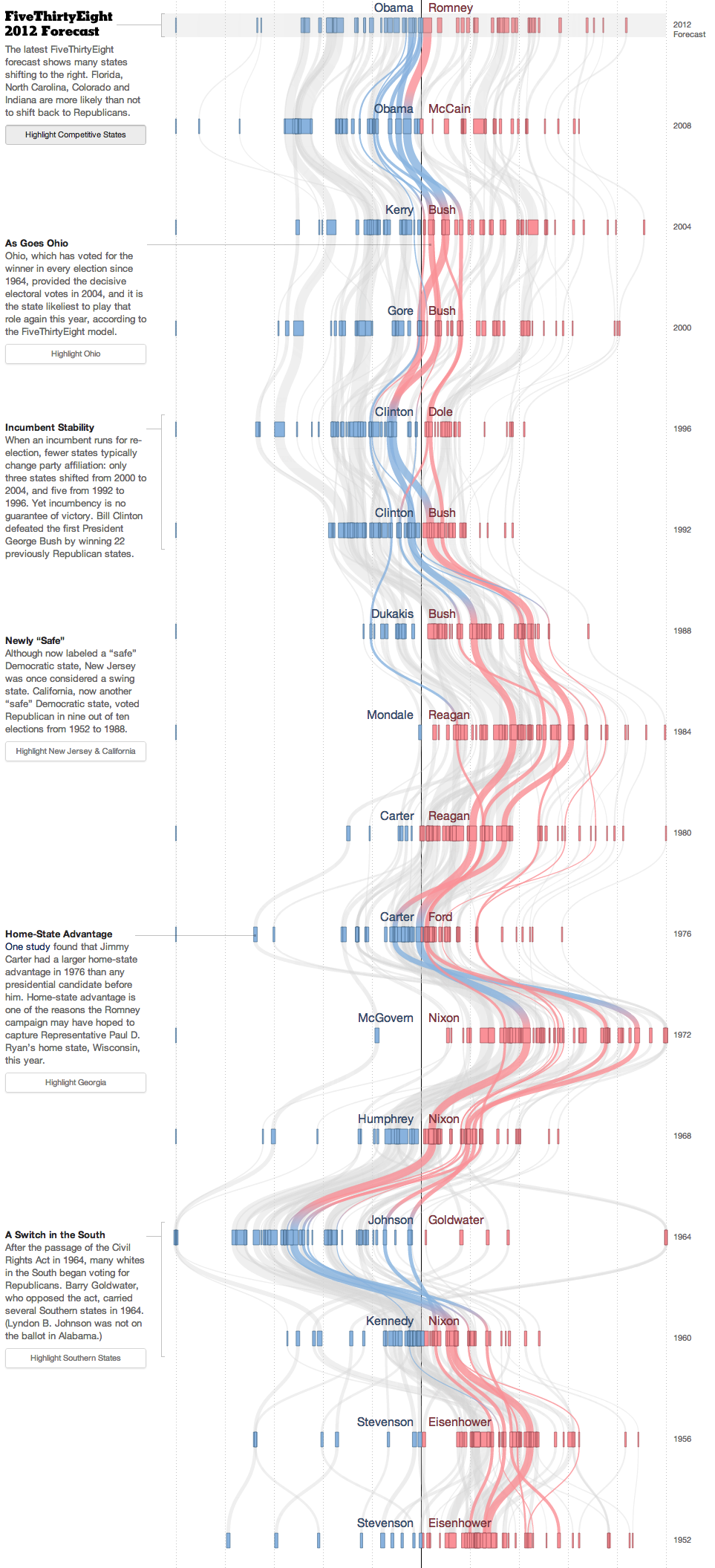 politics Tuesday, September 11, 2012 at 5:03PM
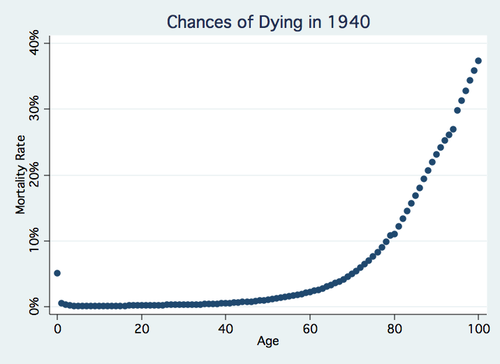
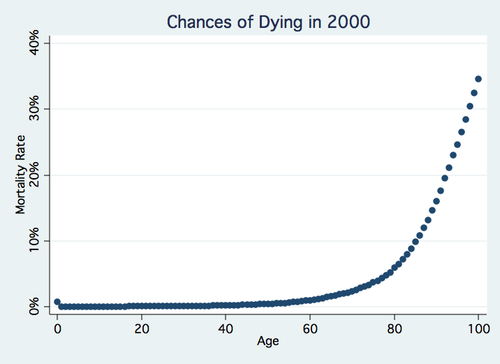
 Edward Marks has a fantastic article on how you should think about life expectancy numbers.
If you type “life expectancy” into Google, it will spit back the World Bank estimate of 78.2 years in 2010. You’ve likely read numbers close to these in textbooks and articles.
But what do these numbers actually mean? You might guess from the first that someone born in the United States in 2009 could be expected to live about 78.5 years. This is not the case! It actually measures how long someone would be expected to live if every year of their life was spent in 2009.
Be sure to check out the full post, it's a great read.
Saturday, September 8, 2012 at 2:56PM This is one of the most beautiful pieces I've seen created with Processing. The repetition with variation reminds me of a modern Bolero, which is to say this song by Autechre.


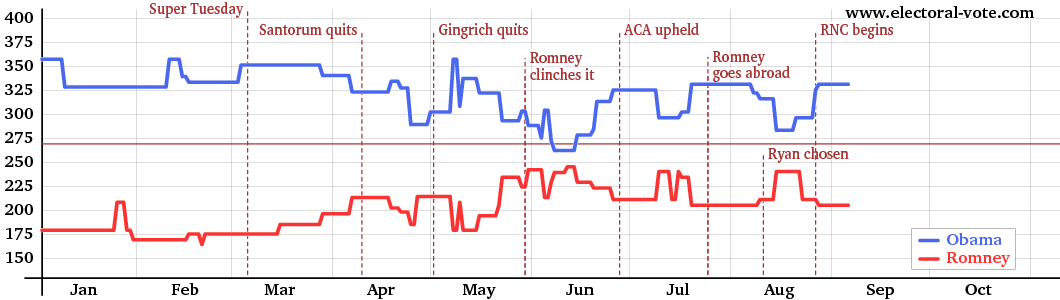
art, processing Friday, September 7, 2012 at 3:08PM As we roll into another election season, be sure to keep an eye on Electoral-Vote.com. It's the best place to get updates. The mainstream media doesn't like explaining how elections actually work in the US, so they play up a lot of nation-wide polls -- which don't actually count for much come election day.
Electoral-Vote.com cuts through all that with some cool tools that track the number of electoral votes for each candidate. Here's their current tally:
Tuesday, April 6, 2010 at 12:31PM Over at Shopobot today we had an attack from this IP Address. It was knocking on lots of ports and opening up common configuration URLs, like "/phpmyadmin/scripts/setup.php" -- etc. We banned them today, but I figured I would put up this note in case anyone finds this via search down the road.
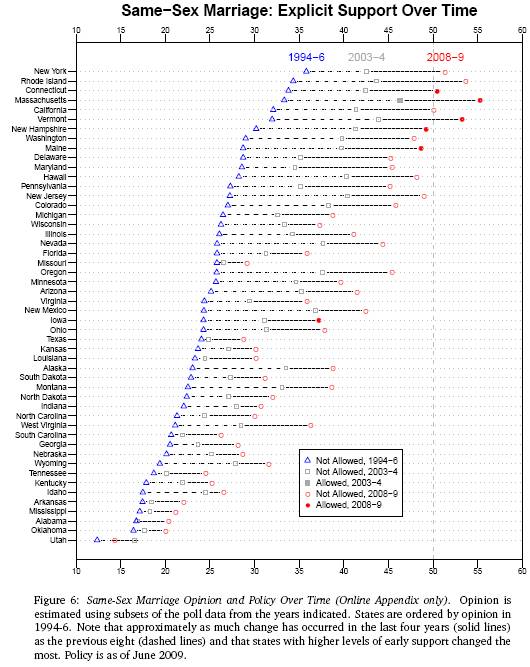
Sunday, November 22, 2009 at 6:24PM Check out this visualization of support for same sex marriage, state by state. It's absolutely fascinating how fast change is coming to the US on this issue.
Be sure to add BaselineScenario to your blog role -- they have some great stuff.
Sunday, November 22, 2009 at 5:23PM In preparation for the holidays, I've been looking for ways to drive traffic to two new landing pages on Shopobot -- namely our iPod and Canon price guides. I ran across RealTrafficSource.com randomly and I noticed they have dirt cheap rates for driving traffic to your site, so I thought I'd investigate more.
First thing I noticed was the offering sounded a bit shady. Usually if you're buying traffic for a quarter of a cent per click (their cheapest package is 1,000 visitors for $2.50) to $0.0001 per click (their most expensive package) you're going to get a lot of junk traffic. I was wondering what their source of traffic is -- but their website doesn't give much information:
Our traffic comes from our own large network of specialized websites and from expired domains, each with its own narrow market, we have come across during our long experience in the online marketing industry. Because we've been in the business so long, we know where to find the hard-to-get traffic.
Our own network of websites receives thousands of visitors every day. We collect this traffic and, using a special algorithm, deliver it to our customer's website.
Well, fair enough! I thought I'd give it a try -- because if worse comes to worse I'm only out $30.
After a day or so I started seeing hits. One thing I've noticed is that 2/3rds of the hits are coming from Russia, Ukraine, and Romania. Hmmm, odd. Here's what I saw in Google Analytics:
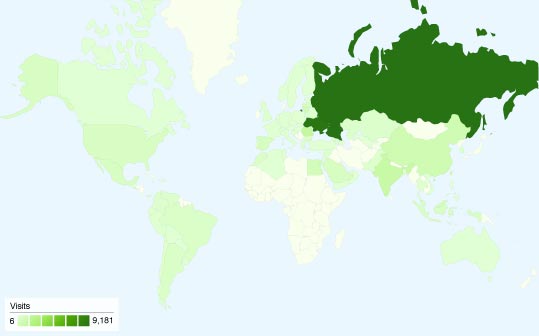
Since you can only really use Shopobot if you live in North America, this isn't exactly what I'd like to see.
On another website I manage an individual user tried using RealTrafficSource.com and didn't find much success. In fact, 100% of visitors left the site immediately upon viewing the page. Check it out in Google Analytics again:
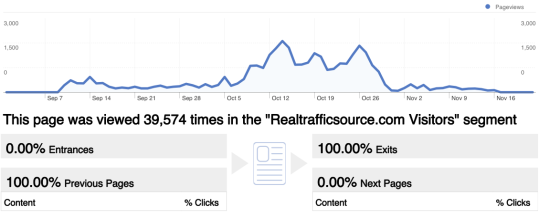
100%? Ouch.
After this has run for a while I'll check my log files to see if I can find out more about these mysterious Russian visitors and what they've done on my website. However, the bottom line for now is that this seems like a bad deal for any websites that require American or English Speaking visitors.
I'll update this post with any findings.